Glycerol is a three-carbon triol with the formula C₃H₈O₃. In chemical naming, glycerol is propane-1,2,3-triol. In commerce and labeling, glycerin or glycerine usually refers to commercial material that contains at least about 95% glycerol. The compound was first isolated in 1783 by Carl Wilhelm Scheele, who described it as the sweet principle of fat. The name glycerin was introduced later, in 1811, by Michel-Eugène Chevreul.
Identity
What is glycerol in practical terms? Glycerol is a low-toxicity polyhydric alcohol made of a three-carbon chain bearing one hydroxyl group on each carbon. It occurs naturally in fats and oils as part of triglycerides, but it is also produced from petrochemical and bio-based feedstocks. Common synonyms include glycerin, glycerine, propane-1,2,3-triol, 1,2,3-propanetriol, 1,2,3-trihydroxypropane, glyceritol, and glycyl alcohol.
A naming distinction is useful in industry. Glycerol usually means the pure chemical substance, whereas glycerin or glycerine often means a refined commercial product. Grade matters. Food grade and pharmaceutical grade are used where human exposure is intended, while technical grades are used in industrial processes. USP glycerin is a pharmacopeial grade used in pharmaceutical and many personal care applications.
Properties
At room conditions, glycerol is a clear, colorless, odorless, hygroscopic, viscous liquid with a sweet taste. It has a molecular weight of 92.09 g/mol, a density of about 1.261 g/cm³, and a viscosity around 1.5 Pa·s. The boiling point is about 290 °C, the melting point is about 18 °C, and the flash point is commonly reported near 177 °C.
Its physical behavior is dominated by the three hydroxyl groups. Extensive intermolecular hydrogen bonding gives glycerol its high viscosity and relatively high boiling point. The same functionality also makes glycerol strongly hygroscopic. Glycerol attracts moisture from air and holds it, which is one of the main reasons glycerol is used as a humectant.
Solubility follows the same pattern. Glycerol is completely miscible with water and alcohols. It is only slightly soluble in ether and dioxane and is insoluble in hydrocarbons. Glycerol is also a useful glycerol solvent for a range of substances including iodine, bromine, and phenol.
Chemically, glycerol is stable under ordinary storage and handling conditions. It is not readily changed by simple contact with air. Still, glycerol is not inert in every situation. Contact with strong oxidizing agents such as potassium chlorate, potassium permanganate, or chromium trioxide can produce violent or explosive reactions. On strong heating, glycerol can decompose and form irritating products including acrolein.
Reactivity
Because glycerol contains both primary and secondary alcohol groups, it participates in many substitution and derivatization reactions. Those hydroxyl groups can be transformed into other functional groups, and glycerol is a precursor for ethers, esters, amines, and aldehyde-related derivatives. This broad reactivity explains why glycerol is not only a formulation ingredient but also a platform chemical in synthesis.
Low volatility is another practical feature. Glycerol remains in formulations instead of evaporating quickly. In products that must stay soft, moist, or uniformly textured, that property is useful.
Production
For a long period, glycerol was obtained mainly as a by-product of soap manufacture from animal and vegetable fats and oils. That historical route remained dominant until the mid-20th century. Since then, industrial synthesis from propylene and carbohydrate-based routes have contributed a growing share of supply.
Modern glycerol production comes from several sources:
- Hydrolysis or saponification of fats and oils
- Petrochemical synthesis from propylene-derived intermediates
- Biodiesel manufacture
- Fermentation or carbohydrate conversion routes
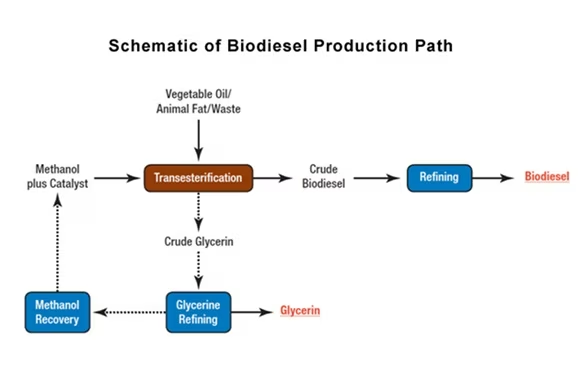
The largest modern context for glycerol production is biodiesel. During transesterification of fats and oils to fatty acid methyl or ethyl esters, glycerol is formed as a major by-product. This has made glycerol from biodiesel an abundant raw material. Crude glycerol from biodiesel is not equivalent to refined glycerol. It can contain water, salts, residual alcohols such as methanol, soaps, catalysts, and other process impurities, so purification is required before food, pharmaceutical, or high-specification industrial use.
That purification step is important. Refined glycerol may be produced by evaporation, distillation, decolorization, activated carbon treatment, and ion exchange. In broad terms, glycerol is a useful bio-based platform chemical because it is renewable when derived from fats, oils, or fermentation feedstocks, and because it can be upgraded into other chemicals.
Functional Uses
The uses of glycerol are easier to understand when they are grouped by function rather than by industry list.
| Function | Why glycerol works | Typical examples |
|---|---|---|
| Humectant | Hygroscopic, binds water | Skin care, hair care, toothpaste, tobacco, baked goods |
| Solvent | Dissolves many polar ingredients | Syrups, extracts, flavors, antiseptic and pharmaceutical liquids |
| Viscosity modifier | Naturally viscous | Cough syrups, oral liquids, creams |
| Plasticizer | Softens solid matrices | Capsules, paper, textiles, coatings |
| Sweetener | Sweet taste, edible | Foods, beverages, confectionery |
| Osmotic agent | Raises osmolality, pulls water across barriers | Lowering intraocular pressure or intracranial pressure |
| Preservative aid | Helps reduce water activity in some systems | Food and tobacco moisture management |
Consumer Products
In glycerol in cosmetics and personal care products, the main roles are humectancy, lubrication, smooth feel, and moisture retention. Glycerol is used in skin care and hair care where moisturization is desired. It is also used in toothpastes, where glycerol helps prevent hardening and drying in the tube. Toothpaste has historically represented a large share of personal care glycerol demand, close to one-third of that market segment.
Glycerol in pharmaceuticals serves several formulation functions. It is used to dissolve active ingredients, retain moisture in dosage forms, and increase viscosity in liquid preparations. It appears in cough syrups, ear medications, antibiotic and antiseptic vehicles, and as a plasticizer in capsule manufacture. Its solvent power is particularly useful with iodine, bromine, phenol, tannins, alkaloids, and mercuric chloride.
In glycerol in food and beverages, the same chemistry is applied differently. Glycerol acts as a solvent, sweetener, and moisture-retaining agent. It is used in extracts of tea, coffee, ginger, and other vegetable materials. It is also used to soften and maintain texture in bread, cakes, meats, cheese, and candy. Food use depends on appropriate purification and compliance with food specifications. In regulatory terms, glycerin is recognized for food use under good manufacturing practice in the United States, and glycerol is listed by JECFA as a food additive with functions that include carrier solvent, emulsifier, humectant, and thickener. In the EU food system it is known as E 422.
Outside these sectors, glycerol is also used to preserve the freshness and moisture content of tobacco, to act as a plasticizer and lubricant in paper production, and in the textile industry for sizing, lubricating, and softening yarn and fabric.
Medical Use
Everyday ingredient use and medical uses of glycerol should be kept separate. Glycerol in toothpaste, foods, or cosmetics is a low-dose ingredient exposure. Medical glycerol is used at much higher doses for specific physiological effects.
The main pharmacological action of glycerol is osmotic dehydration. After oral or intravenous administration, glycerol raises serum osmolality and draws water from tissues into the intravascular space. In clinical use, this can lower intraocular pressure and intracranial pressure. Reported onset is rapid, often within 10-30 minutes after oral or intravenous dosing.
This osmotic action explains older ophthalmic and neurologic uses. Oral glycerol has been used to reduce elevated intraocular pressure, and glycerol has also been used in the management of increased intracranial pressure and cerebral edema. Experimental animal work also documented effects in cerebral edema models.
Compared with mannitol, glycerol can also cause diuresis, but the electrolyte loss is often less prominent because glycerol is metabolized rather than cleared only by renal excretion. Mannitol depends almost entirely on renal elimination. In current practice, intravenous mannitol and hypertonic saline are commonly used osmotic agents for raised intracranial pressure, while oral glycerol remains more associated with selected ophthalmic use and older protocols.
Other effects have been observed experimentally in animals, including increased muscle irritability, relaxation of the gallbladder sphincter, and increased force and amplitude of intestinal contraction, but these do not have clear clinical relevance.
Glycerol has also been used as a partial dietary substitute for carbohydrate because it enters central metabolism and serves as a substrate for gluconeogenesis.
Metabolism
After absorption, glycerol is handled mainly in the liver and to a lesser extent in the kidney. About 80% of glycerol metabolism occurs in the liver and roughly 10-20% in the kidney, consistent with the distribution of glycerol kinase.
Glycerol enters metabolism by phosphorylation to glycerol-3-phosphate and then conversion into intermediates that feed glycolysis or gluconeogenesis. Because glycerol can contribute to glucose formation, serum glucose can rise during therapeutic administration. This link to glucose metabolism explains why diabetic patients require caution during medical glycerol use.
Renal handling also matters. Glycerol is filtered and almost completely reabsorbed by the renal tubules until serum concentration reaches about 0.15 mg/mL. Above that threshold, glycerol appears in urine and produces an osmotic diuresis that is roughly proportional to the administered volume.
Pharmacokinetics
Human pharmacokinetic data are limited, but several patterns are established. Glycerol is well absorbed after oral dosing. Peak serum concentrations usually occur within 60-90 minutes.
Published values cited in the source material show the range seen with different routes and regimens:
- After a single oral dose of 1-1.27 g/kg, plasma concentration around 1.45 mg/mL at 60-90 minutes
- After 0.25 g/kg given intravenously over 4 minutes, peak plasma concentration about 0.9 mg/mL
- After a 6-hour constant intravenous infusion totaling 1.5 g/kg, plasma concentration about 0.34 mg/mL at the end of infusion
- During continuous infusions in severe neurologic illness, serum concentrations may vary widely
In one reported set of patients with Reye's syndrome, infusion rates of 0.38-0.88 g/kg/h produced serum concentrations from 1.48 to 5.83 mg/mL. In another report involving patients with normal hepatic and renal function receiving continuous intravenous glycerol infusion, steady-state serum concentrations ranged from 0.8 to 7.0 mg/mL.
Safety
Glycerol safety depends strongly on context. As a common ingredient, glycerol is generally regarded as low in toxicity and is widely used in foods, cosmetics, and pharmaceuticals. As a therapeutic osmotic agent, the risk profile changes.
Notable adverse reactions reported in humans include intravascular hemolysis, hemoglobinuria, renal damage, hyperglycemia, and hyperosmolality. Oral adverse effects can include headache, dizziness, nausea, vomiting, thirst, dry mouth, diarrhea, and confusion. Severe dehydration, arrhythmias, and hyperosmolar states have also been reported.
Hyperglycemia is a specific concern because glycerol feeds into carbohydrate metabolism through the Embden-Meyerhof pathway. In most patients this is not a major clinical problem, but it can matter in diabetes. Transient hepatomegaly from glycogen storage has also been reported and was reversible after stopping administration.
Patients with cardiac, renal, hepatic, diabetic, dehydrated, or hypervolemic states need special caution during medical glycerol use because fluid shifts can worsen underlying disease and may contribute to pulmonary edema or circulatory overload.
Toxicity also depends on route. Very high doses in animals, especially by parenteral routes, produced restlessness, reduced activity, tachycardia, vomiting, cyanosis, tremor, diuresis, imbalance, clonic convulsions, and death. This sequence has not been a typical pattern in humans. A reported child ingestion of 300 g led to coma with eventual full recovery. Rare fatal cases in the literature have usually involved severe renal injury or extreme osmotic disturbance, but causality has been difficult to establish in some reports.
From a handling standpoint, glycerol mist can irritate the respiratory tract, and overheated glycerol can release acrolein. Incompatible storage with strong oxidizers should be avoided.
Environmental Profile
Glycerol is widely described as biodegradable and of relatively low environmental concern compared with many petrochemical solvents. If released to soil or water, it is expected to biodegrade rapidly under aerobic conditions. It has high mobility in soil, low tendency to bioaccumulate, and very low volatility from water. Those features support its reputation as a useful bio-based industrial intermediate, although waste streams from crude glycerol production still require proper management because impurities, not glycerol itself, often drive disposal concerns.
Boundaries
Several common misunderstandings should be avoided.
Glycerol is not always natural. It may come from plant oils, animal fats, biodiesel streams, fermentation, or petrochemical synthesis.
Glycerol is not interchangeable across grades. Food grade glycerol, USP glycerin, and technical glycerin are not chosen for the same uses.
Glycerol is not risk-free simply because it is common in foods and cosmetics. High-dose medical glycerol can produce clinically important osmotic, metabolic, renal, and cardiovascular effects.
Glycerol is also not a universal moisturizer replacement. Its humectant action is one mechanism among many in formulation, and performance depends on concentration, surrounding ingredients, and the water balance of the final product.
References
Pagliaro M, Rossi M. The Future of Glycerol. 2nd ed. Royal Society of Chemistry; 2010. URL
The Soap and Detergent Association. Glycerine: an overview. 1990. URL
Donkin SS. Glycerol from biodiesel production: the new corn for dairy cattle. Rev Bras Zootecn. 2008;37:280-286. URL
Quispe CA, Coronado CJ, Carvalho JA. Glycerol: A perspective on incorporation of glycerol purification process in biodiesel plants using waste cooking oil as feedstock. Energy. 2010;35(6):2493-2504. URL
Mandell S, Taylor JM, Kotsilimbas DG, et al. The effect of glycerol on cerebral edema induced by tri-ethyltin sulphate in rabbits. J Neurosurg. 1966;24(6):984-986. URL
Senior B, Loridan L. Studies of liver glycogenoses, with particular reference to the metabolism of intravenously administered glycerol. N Engl J Med. 1968;279(18):958-965. URL
National Center for Biotechnology Information. Glycerol. PubChem Compound Summary for CID 753. URL
U.S. Food and Drug Administration. 21 CFR 182.1320 Glycerin. URL
Joint FAO/WHO Expert Committee on Food Additives. Glycerol. URL
EFSA Panel on Food Additives and Nutrient Sources added to Food. Re-evaluation of glycerol (E 422) as a food additive. EFSA J. 2017;15(3):4720. URL
U.S. Food and Drug Administration. Testing of Glycerin, Propylene Glycol, Maltitol Solution, Hydrogenated Starch Hydrolysate, Sorbitol Solution, and Other High-Risk Drug Components for Diethylene Glycol and Ethylene Glycol. URL