A hemoglobin test measures how much hemoglobin is present in the blood. Hemoglobin is the protein inside red blood cells that carries oxygen from the lungs to the body’s organs and tissues and brings carbon dioxide back to the lungs. In most settings, hemoglobin is checked as part of a complete blood count, so cbc hemoglobin is usually interpreted along with the rest of the CBC rather than by itself.
Basics
A hemoglobin level helps show whether red blood cell mass is low, high, or within the expected range. A low hemoglobin level usually points to anemia or another process that lowers red blood cells. A high hemoglobin level can happen when the body is making more red blood cells, when oxygen levels have been low for a long time, or when there is less plasma volume because of dehydration.
Hemoglobin test results do not identify the cause on their own. They are a starting point. Age, sex, pregnancy, altitude, smoking, hydration status, recent illness, physical activity, medicines, and the rest of the CBC all affect interpretation.
Normal ranges
Normal hemoglobin levels are reported either in g/dL or g/L. The numbers are the same measurement expressed in different units. For example, 13.8 g/dL is 138 g/L.
Common adult reference ranges are:
| Group | Hemoglobin normal range |
|---|---|
| Adult male | 13.8-17.2 g/dL (138-172 g/L) |
| Adult female | 12.1-15.1 g/dL (121-151 g/L) |
Common pediatric ranges are:
| Group | Hemoglobin normal range |
|---|---|
| Newborn | 14-24 g/dL (140-240 g/L) |
| Infant | 9.5-13 g/dL (95-130 g/L) |
These are common values, not universal cutoffs. A normal hemoglobin level on one lab report may be slightly different on another. Different laboratories may use different analyzers, different reference populations, and sometimes different specimen types. That is why the haemoglobin normal range on the report itself matters.
Pregnancy also changes the expected normal range of hemoglobin. Hemoglobin often falls during pregnancy because plasma volume expands more than red cell mass. Second-trimester values are commonly the lowest. Children also need age-specific interpretation, because newborns, infants, school-age children, and adolescents do not share one normal hemoglobin count.
Older adults may have slightly different baseline values, but anemia is not considered a normal part of aging. If the hemoglobin level is below the laboratory reference interval, the cause still needs to be looked for.
Reading the number
For many adults, a result only slightly below the lower limit is considered mildly low. Values well below the reference interval are more concerning, especially when symptoms are present or the number is falling quickly. At the other end, a mildly high hemoglobin level can reflect dehydration, smoking, or altitude, while a clearly elevated result may require evaluation for chronic low oxygen states or a bone marrow disorder such as polycythemia vera.
When people ask what is a normal hemoglobin level, the practical answer is this: the normal hemoglobin level is the range given by the testing laboratory after taking age and sex into account, then adjusted further by clinical context. A single number without that context can mislead.
Low hemoglobin
Lower than normal hemoglobin can happen through a few main mechanisms.
Blood loss
Blood loss is one of the most common explanations. It may be obvious, such as after surgery, injury, or heavy menstrual bleeding, or it may be hidden, such as slow bleeding from the digestive tract. Ongoing bleeding can gradually lower the hemoglobin level and often leads to iron deficiency over time.
Reduced production
Sometimes the bone marrow does not make enough new red blood cells. This can happen with iron deficiency, low folic acid, low vitamin B₁₂, low vitamin B₆, malnutrition, chronic kidney disease, chronic illness, bone marrow disease, infection, leukemia, other cancers, drug toxicity, or radiation therapy. Kidney disease matters because the kidneys help regulate red blood cell production.
Increased destruction
Red blood cells may also be destroyed faster than normal. This is called hemolysis. In that setting, hemoglobin falls because red cells are not surviving long enough in the circulation.
Dilution
Too much body water can lower measured hemoglobin by dilution. Pregnancy and overhydration can both shift results downward even when the body’s total red cell mass has not fallen to the same degree.
Low hemoglobin symptoms
Some people with a mildly low hemoglobin level have no symptoms. Others notice fatigue first. Low hemoglobin symptoms commonly include weakness, dizziness, shortness of breath, pale skin, cold hands and feet, and reduced exercise tolerance. When anemia is more severe, palpitations, chest discomfort, fainting, or marked breathlessness can occur.
Symptoms do not always match the number exactly. A gradual drop may cause few symptoms at a level that would feel severe if the same drop happened quickly.
High hemoglobin
Higher than normal hemoglobin is often linked to chronically low oxygen levels in the blood. This can happen when the body is compensating for hypoxia by making more red blood cells.
Low oxygen states
Common high hemoglobin causes include exposure to high altitude, smoking, chronic low blood oxygen, congenital heart disease, right heart failure, and lung scarring or thickening such as pulmonary fibrosis. Sleep-related breathing disorders and chronic lung disease are also common clinical examples of long-term low oxygen states.
Hemoconcentration
Dehydration can produce a high hemoglobin reading because the liquid portion of blood is reduced. In that situation, the red cells are more concentrated rather than truly overproduced.
Bone marrow disorders
A bone marrow disorder can directly raise hemoglobin. The classic example is polycythemia vera, in which the marrow produces too many blood cells. This is different from secondary causes such as altitude or chronic hypoxia.
A high result may also be seen after living at high altitude for several weeks, because hemoglobin rises as the body adapts to lower oxygen pressure.
High hemoglobin symptoms
Some people with high hemoglobin have no symptoms. When symptoms do occur, they may include headache, dizziness, itching, blurred vision, redness of the skin, or problems related to thickened blood and clotting. Symptoms are more likely when the rise is substantial or due to a disorder such as polycythemia vera.
What affects hemoglobin levels
Several non-disease factors can shift a result up or down:
- altitude
- smoking
- dehydration
- excessive body water or overhydration
- pregnancy
- endurance training or heavy physical activity
- some medicines
- sample timing and testing conditions
This is one reason average hemoglobin levels are not enough for interpretation. The same hemoglobin normal value may be ordinary in one person and abnormal in another.
Hemoglobin is not the same thing
Hemoglobin is related to red blood cells, but it is not the same as several other common lab terms.
- Hemoglobin is the amount of oxygen-carrying protein in the blood.
- RBC count is the number of red blood cells.
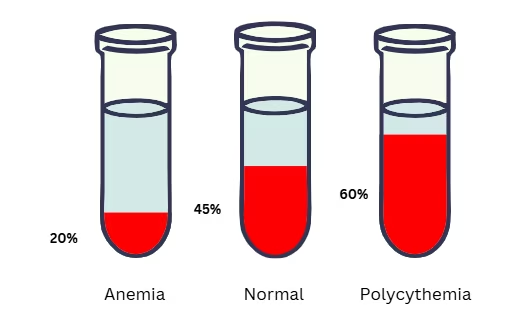
- Hematocrit is the percentage of blood volume made up by red blood cells.
- Iron studies, such as ferritin and transferrin saturation, estimate iron status.
A person can have a low hemoglobin level without simple dietary iron deficiency, and hemoglobin alone cannot diagnose iron deficiency. That is why anemia hemoglobin level and iron level are not interchangeable concepts.
What clinicians check next
After an abnormal hemoglobin result, the next step is usually pattern recognition rather than guessing from one number.
Doctors often review:
- hematocrit and RBC count
- MCV, which shows whether red cells are small, normal-sized, or large
- RDW, which shows variation in cell size
- reticulocyte count, which shows marrow response
- ferritin and iron studies
- vitamin B₁₂ and folate
- kidney function
- signs of blood loss
- oxygen status and lung or heart disease history
A low MCV and low ferritin suggest iron deficiency. A normal or high MCV may point toward vitamin B₁₂ or folate deficiency, alcohol-related effects, some medicines, or marrow disorders. A high reticulocyte count suggests blood loss or hemolysis. A low reticulocyte count suggests reduced production.
This is why cbc hemoglobin should be read with the rest of the CBC. Hemoglobin normal range questions are common, but interpretation usually depends on the pattern across multiple results.
When to get prompt medical care
Urgent assessment is warranted if a very low hemoglobin level is accompanied by chest pain, fainting, severe shortness of breath, rapid worsening weakness, confusion, or signs of active bleeding such as black stools, vomiting blood, or heavy ongoing blood loss.
A very high hemoglobin level with severe headache, vision changes, neurologic symptoms, or clotting symptoms also needs prompt medical attention.
Practical interpretation
The normal range of hemoglobin is useful, but it is only the first filter. Normal hemoglobin levels vary by laboratory, age, sex, pregnancy status, and setting. A result just outside the reference interval is often less informative than a trend over time and the rest of the CBC.
For that reason, the most reliable way to interpret hemoglobin test results is to combine the number with symptoms, medical history, and related blood tests. A mildly abnormal result may reflect hydration, smoking, pregnancy, altitude, or temporary illness. A persistent abnormal result usually needs a fuller evaluation for anemia, chronic disease, low oxygen states, blood loss, or bone marrow conditions.
References
World Health Organization. Guideline on haemoglobin cutoffs to define anaemia in individuals and populations. URL
MedlinePlus. Hemoglobin Test: MedlinePlus Medical Test. URL
MedlinePlus. Hemoglobin: MedlinePlus Medical Encyclopedia. URL
Cleveland Clinic. Hemoglobin Test: What It Is, Procedure & Results. URL
Gerber GF. Evaluation of Anemia. Merck Manual Professional Edition. 2024. URL
Gerber GF. Overview of Anemia. Merck Manual Consumer Version. 2024. URL
Liesveld J. Polycythemia Vera. MSD Manual Consumer Version. URL